
Who Are the ‘Big 4′ of New Wave?
The number of incredible artists who fall under the new wave umbrella is both impressive and befuddling.
The genre emerged in the late ‘70s, initially as a way to describe the evolution of punk from rambunctious noise to a more melodic sound. But as the ‘80s dawned, "new wave" became a catch-all phrase – a label often placed upon any band that featured a catchy hooks and a synthesizer (and there were a lot of them). As such, people often struggled to define exactly what new wave sounded like – especially when other sub-genre terms like post-punk, indie rock and alternative started popping up.
In some ways, new wave’s undefined creative boundaries helped to make it great. Anything could be new wave with the right style and attitude, so long as punk energy and pop hooks were somewhere in the mix.
READ MORE: 5 New Wave Bands That Deserve to Be in the Rock and Roll Hall of Fame
The eclectic intellectualism of Talking Heads? That’s new wave. The reggae rock fusion of the Police? That’s new wave as well. What about Depeche Mode’s dark drones, Duran Duran’s upbeat anthems or Blondie’s entrancing melodies? All these and more fell under new wave’s oversized canopy.
With such an impressive collection of artists to choose from, naming a Big 4 of new wave is a daunting task. Fortunately, we at UCR were up for the task. Who got picked for this Mt. Rushmore of artists? Check out our Big 4 of new wave below.
Talking Heads
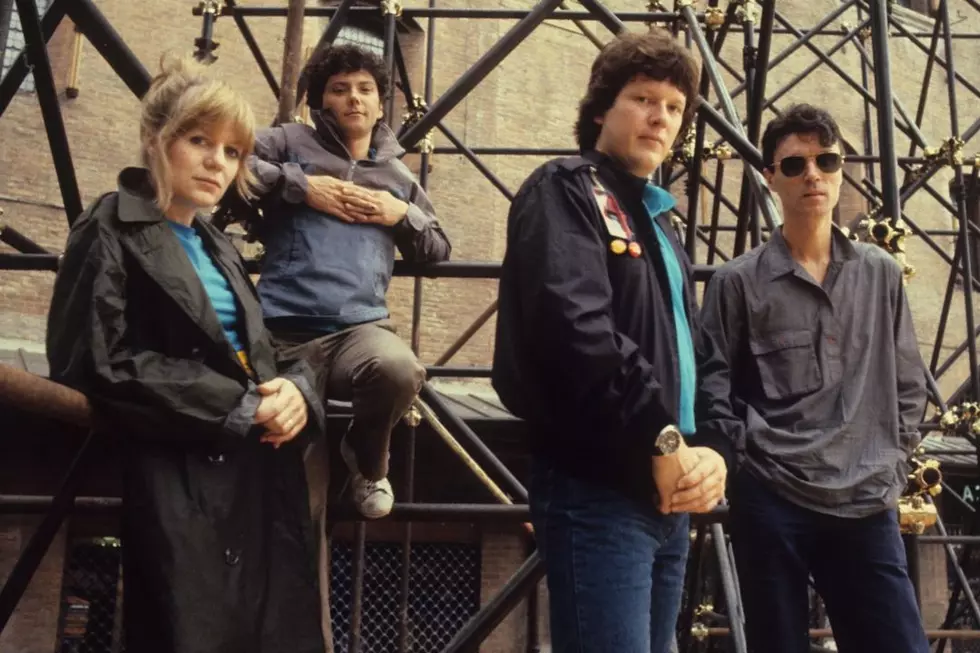
When breaking down what makes a band Big 4-worthy, things like artistic merit, commercial success, influence on other artists and having a lasting legacy all come into play. Talking Heads check all of these boxes and more.
The David Byrne-fronted group exploded out of New York’s music scene, blending art rock, punk, jazz and world music into their own brand of new wave perfection. Classic tracks like “Psycho Killer,” “Once in a Lifetime” and “Burning Down the House” still sound as fresh today as they did back in the ‘70s and ‘80s.
Talking Heads also created engaging visuals that helped to completely redefine what a rock band could look and sound like (think of the Big Suit from Stop Making Sense, or the dancing in the "Once in a Lifetime" music video). Decades later, artists who’ve followed still hail them as an inspiration, further proof of the group’s timelessness impact on music.

The Cure
There may be some squabbling about including the Cure in our new wave Big 4. The band went through periods of punk, post-punk and goth – labels some fans may prefer to new wave. How you define the band is a matter of opinion and, ultimately, an unnecessary exercise of splitting hairs.
Without question, the Cure was a generational act, fusing dark, emotive lyrical content within finely crafted melodies. Frontman Robert Smith’s distinctive croon remains one of the most recognizable voices in all of rock, and with his leadership the band surged to become one of the ‘80s biggest bands.
With more than 30 million albums sold, along with such classic hits as “Lovecats,” “Close to Me,” “Lovesong” and “Friday I’m in Love,” the Cure was embraced by a passionate worldwide fanbase. They also proved hugely impactful on the artists who followed them, with Nine Inch Nails, Blink-182, Smashing Pumpkins and Deftones among the many acts who’ve cited the Cure’s influence.

The Police
What the Police were able to do during their brief classic era is remarkable. After forming in 1977, the trio – made up of singer/bassist Sting, guitarist Andy Summers and drummer Stewart Copeland – released their debut album, Outlandos d'Amour (1978). Hits "Roxanne", "Can't Stand Losing You" and "So Lonely" launched them to stardom, setting in motion a prolific run of material.
The Police proceeded to release an album a year for the next three years: Reggatta de Blanc (1979), Zenyatta Mondatta (1980) and Ghost in the Machine (1981). Each of them garnered multi-platinum sales and spawned massive hits, further elevating the band’s fame. With their distinctive blend of punk, reggae and pop influences, the trio sounded unlike any other act at the time.
Their fifth and final album, Synchronicity, arrived in 1983, garnering universal praise and commercial success. Then, a shocking twist – after becoming the biggest band in the world, the Police disbanded. Infighting among the members had become too much to bear, a schism that kept them separated for more than 20 years until a reunion tour in 2007. Regardless, the Police were able to cement their place in history, ranking among the most popular and influential new wave acts to ever take the stage.

The Cars
One of the primary characteristics of new wave music is its polished, pop-leaning style – an evolution that maintained punk’s energy but brought in a more radio-friendly sound. No act made better use of ear-catching melodies than the Cars, the beloved Boston band fronted by Ric Ocasek.
Formed in 1976, the group delivered several of power pop’s greatest tunes in a span running roughly 12 years. Songs like “Just What I Needed,” “My Best Friend’s Girl” and “Good Times Roll” got audiences dancing and became MTV mainstays, while tracks such as the ballad “Drive” proved the band could infuse deeper emotion within their shimmery pop sheen. Armed with clever wordplay and a knack for catchy choruses, the Cars became one of new wave’s defining acts.
Top 40 New Wave Albums
Gallery Credit: UCR Staff
 Source: Who Are the ‘Big 4′ of New Wave?